
Better garage approach
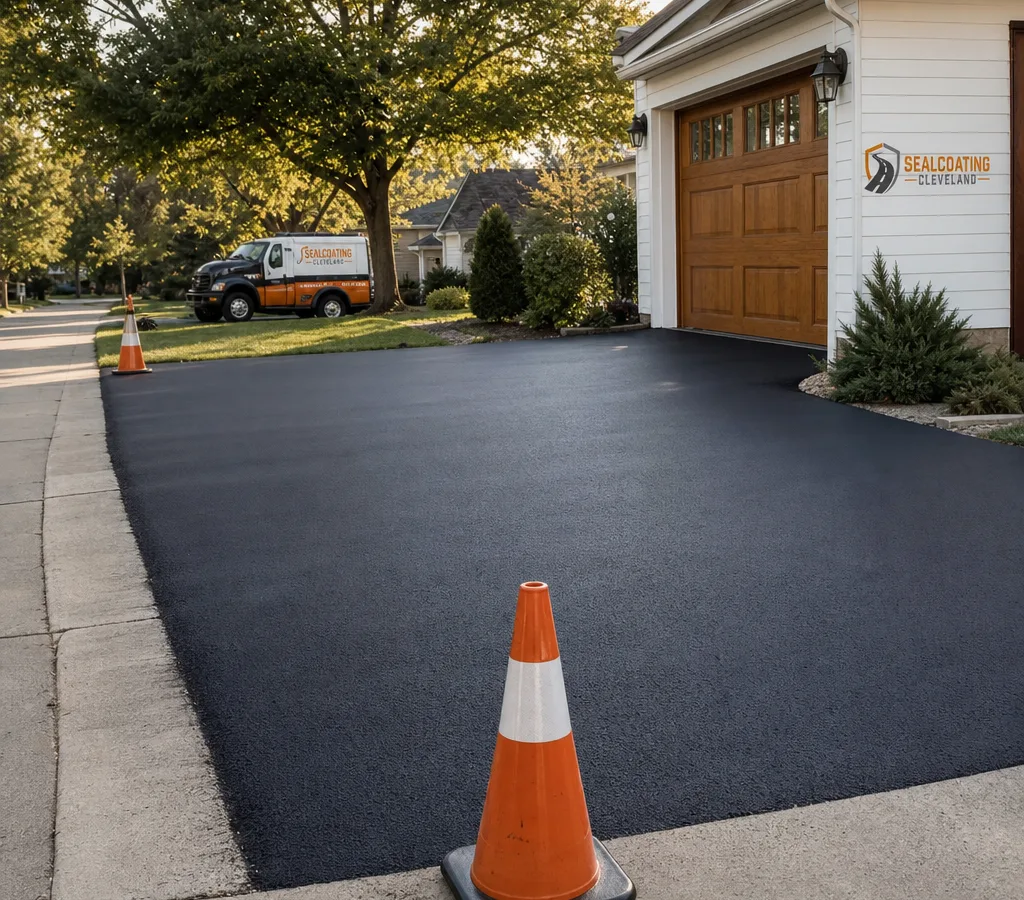
A sound transition at the garage helps cars enter and leave without catching a rough asphalt edge. The site review identifies where that transition needs repair or careful coating.
Serving Cleveland, Ohio & surrounding areas
Mon–Fri 8am–6pm · Sat 9am–2pm
Asphalt care for Parma properties
Parma driveways often need pavement care that fits a narrow approach, a garage threshold, and the way cars enter and leave. Sealcoating Cleveland travels from its Cleveland shop for repair, crack work, paving, and coating.
Residential pavement care
Older driveway layouts reward a close look at edges, cracks, and the small access details that affect preparation.
A narrow driveway can show wear first where tires turn toward the garage or pass close to a walk. Those edges take repeated load, plowing contact, and water that sits after a thaw. A visit to the property helps separate ordinary surface aging from a repair issue that needs attention before coating.
Parma homeowners often want to protect asphalt without losing use of a garage for longer than necessary. That makes access part of the plan from the beginning. Cars, gates, side clearance, and the place where equipment can stand are discussed before the work day is set.
Crack filling belongs ahead of sealcoating when open seams give water a route below the asphalt. The crew cleans those areas, checks for loose material, and recommends repair where the pavement has broken down. A protective coat is applied only after the base condition supports it.
Parma sealcoating built around access
The useful scope is the one that matches a driveway’s condition and the space available to complete it cleanly.
Garage-side pavement calls for careful cut-in work because coating, repair material, and tools all have to stay clear of concrete and nearby walks. Rather than treating the driveway as an open rectangle, we look at its turning points, joints, and the spots where the asphalt meets another surface.
Preparation also changes with what is on the drive. Leaves, grit, loose chips, and open cracks can interfere with a clean application. By dealing with those conditions first, the crew can give the owner a work plan that explains what will be repaired, what will be coated, and why.
A careful approach to worn driveways
The value of the work comes from matching each pavement problem to the proper maintenance step instead of covering over it.
A sound transition at the garage helps cars enter and leave without catching a rough asphalt edge. The site review identifies where that transition needs repair or careful coating.
Cleaning and filling selected cracks helps reduce the open paths where water can enter the pavement. The condition of the surrounding asphalt determines whether filler is appropriate.
Careful cut-in work keeps the coating aligned with driveway edges, walks, and garage slabs. That gives the finished surface a more orderly appearance without claiming to repair failed asphalt.
A narrow residential drive works better when the owner knows where equipment will sit and which cars must move. Those details are settled before the scheduled service.
An on-site assessment turns visible conditions into a written quote. It distinguishes surface protection from crack treatment, patching, or other work that needs to happen first.
Surface protection with practical prep
Parma driveway work is arranged around the condition of the asphalt and the homeowner’s ability to keep the garage and approach clear.
We begin at the property by examining cracks, worn edges, the garage approach, and the usable width of the drive. The homeowner can point out trouble spots and explain the access needs that should shape the plan.
Before materials arrive, we discuss vehicle removal, equipment placement, and the areas that need to remain clear. This keeps a tight driveway from becoming a surprise staging problem on service day.
Loose debris is removed, cracks selected for treatment are cleaned, and repair needs are identified before a coating goes down. The preparation follows the conditions found on that specific driveway.
The crew performs the quoted crack filling, repair, paving, or sealcoating with attention to the garage threshold, walks, and asphalt edges. Work stays focused on the scope approved for the property.
At completion, we explain how to keep cars and foot traffic off the finished area while it cures. Reopening guidance reflects the service performed and the conditions present that day.
Pricing for the work on site
Published ranges offer a starting point, while the written quote follows an on-site look at the driveway’s size, access, and repair needs.
A Parma sealcoating estimate is based on the asphalt we can actually inspect, including crack work and edge condition. Sealcoating is about $0.20 to $0.45 per square foot, depending on size and layout. The figure does not replace a visit because a narrow drive can require different preparation than an open paved area.
For a standard residential driveway, the published range is around $250 to $650. Larger paved areas and commercial lots commonly run $900 to $3,500+, depending on size and layout. We walk the property first, describe the proposed preparation in writing, and then provide a quote tied to the work rather than a guess.
Service from our Cleveland location
Parma is served from our single Cleveland shop, with the appointment planned around driveway access instead of any local branch arrangement.
Sealcoating Cleveland schedules Parma work from 1728 St Clair Ave. NE, Suite 4, Cleveland, OH 44114. Before the trip, we confirm the driveway address, parking needs, and the access points that matter to the crew. That lets the team arrive ready to stage within the space the property actually provides.
The service visit includes a plan for what stays clear while work is active and what needs protection afterward. We do not present a separate Parma office or crew base. We travel from Cleveland for the scheduled project, then give property-specific reopening guidance before the team leaves.
Work shown in the field
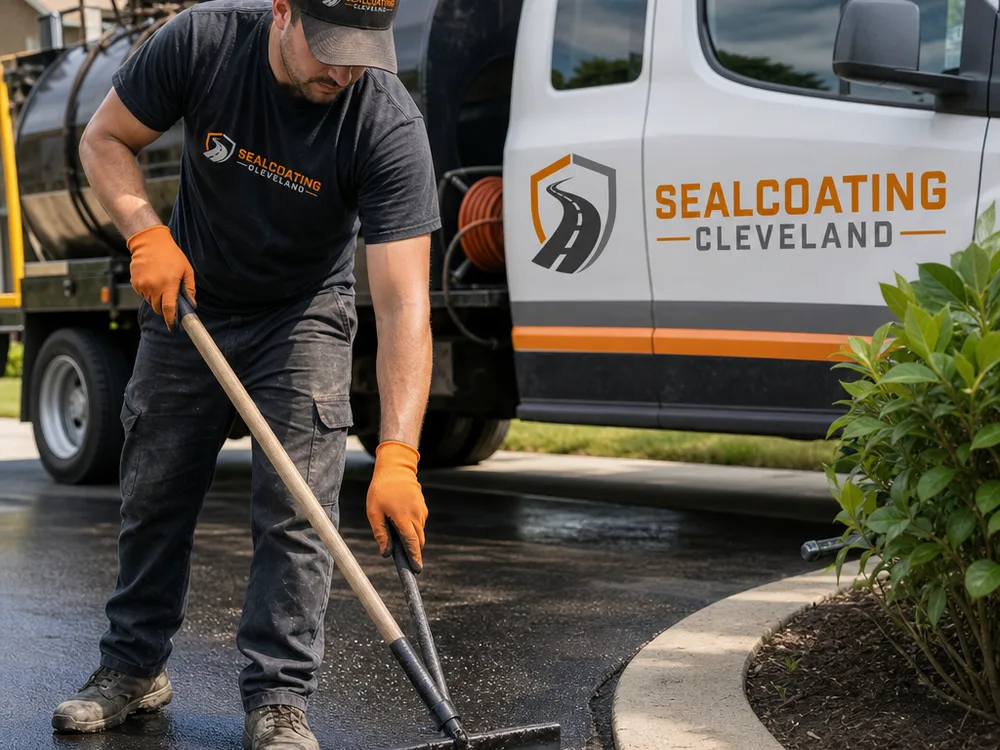
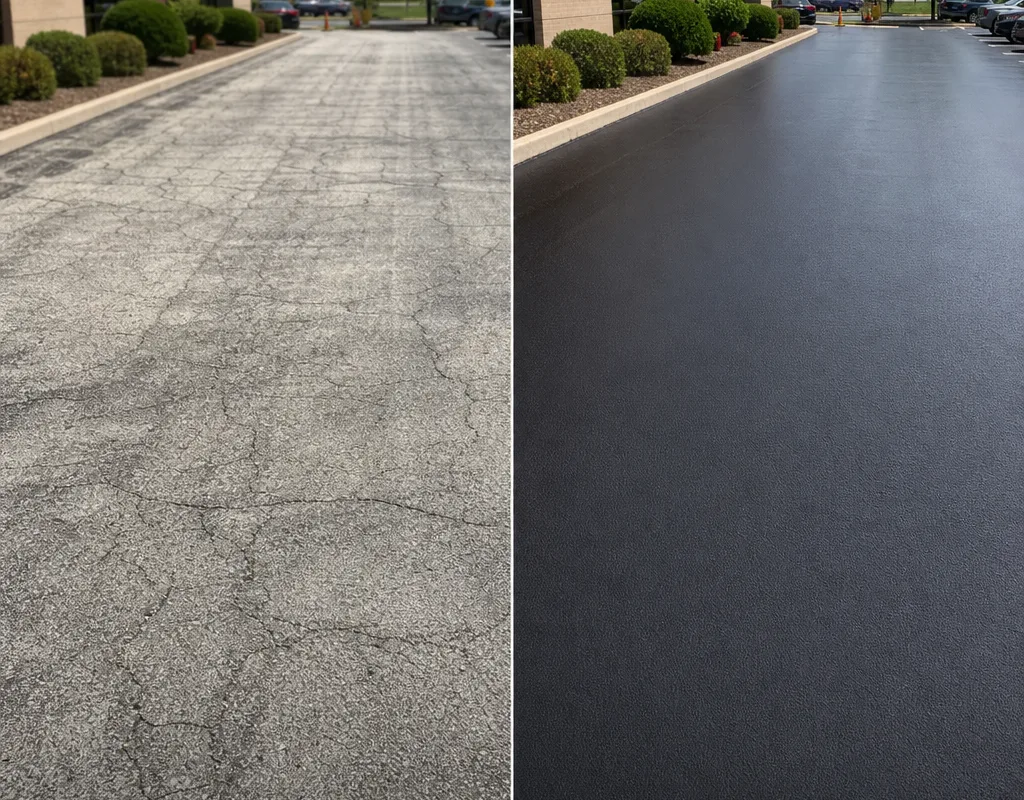
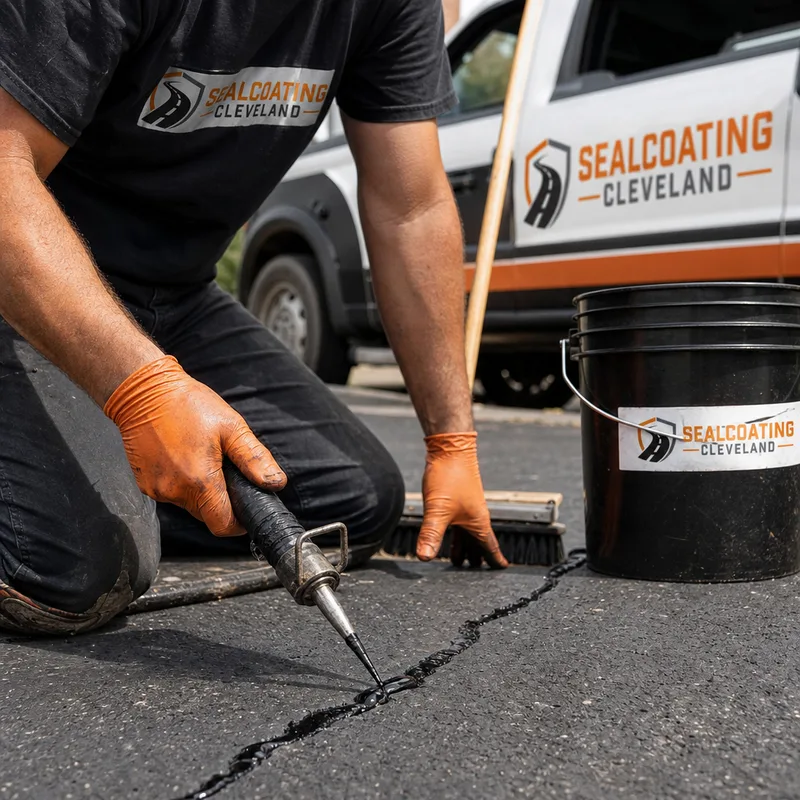
Crack filling and finished commercial sealcoating show the preparation and coverage behind a protected surface.
Questions Parma owners ask
These answers focus on the driveway conditions and access questions that commonly shape a Parma pavement maintenance plan.
A driveway is reviewed for more than color loss before sealcoating is recommended. We look at open cracks, loose edges, broken areas, and the condition around the garage approach. Sound asphalt with normal surface aging may be a candidate for coating, while deeper failures, active breakup, or unsupported edges should be addressed with crack treatment or repair first.
Tight driveway layouts leave less room for equipment, materials, and household vehicles. Planning ahead identifies the cars that must be moved, the clearance required at a garage or walk, and the portion of the drive that needs to remain free. That preparation helps the crew work cleanly and helps the homeowner avoid driving onto fresh material.
Cracks selected for treatment are cleaned so rubberized filler can contact the asphalt rather than loose debris. The work is not a substitute for repairing pavement that has already lost its base or broken into pieces. During the on-site review, we explain whether crack filling is suitable or whether a patch should be considered before surface protection.
Yes, those transitions are part of the site review. The crew checks how the asphalt meets the garage slab and walk, then plans cut-in work that stays on the pavement. Access still has to be managed, because cars and foot traffic need to remain off fresh material for the period appropriate to the service and conditions that day.
The quote reflects size, layout, access, and the work the asphalt needs before a coating or repair is performed. Sealcoating is about $0.20 to $0.45 per square foot, depending on size and layout. A standard residential driveway is around $250 to $650, but the on-site review is what identifies crack filling, edge repair, and preparation included in the written scope.
Reopening depends on the material applied and the conditions at the property on service day. Before leaving, we explain the areas that need to stay clear and the precautions that protect fresh work. The purpose is to give the homeowner practical guidance for bringing cars back without marking, scuffing, or disturbing the newly completed surface.
On narrow driveway work, request an on-site quote
For a Parma driveway with cracks, worn edges, or a surface ready for maintenance, schedule an on-site review. We will assess the garage approach, access, and preparation needed, then provide a written quote from our Cleveland location.
Request a quote
Send the details and we will come back to you to arrange an on-site look and a written quote.