Lakewood pavement and driveway work

Lakewood Asphalt Paving, Repair, and Sealcoating

Lakewood paving and asphalt maintenance often come down to curb lines, concrete aprons, and limited room to stage equipment. We travel from Cleveland to assess joints, repairs, coating, and driveway transitions in person.

✓Commercial surface preparation ✓Crack work before sealing ✓Phased access and cure planning
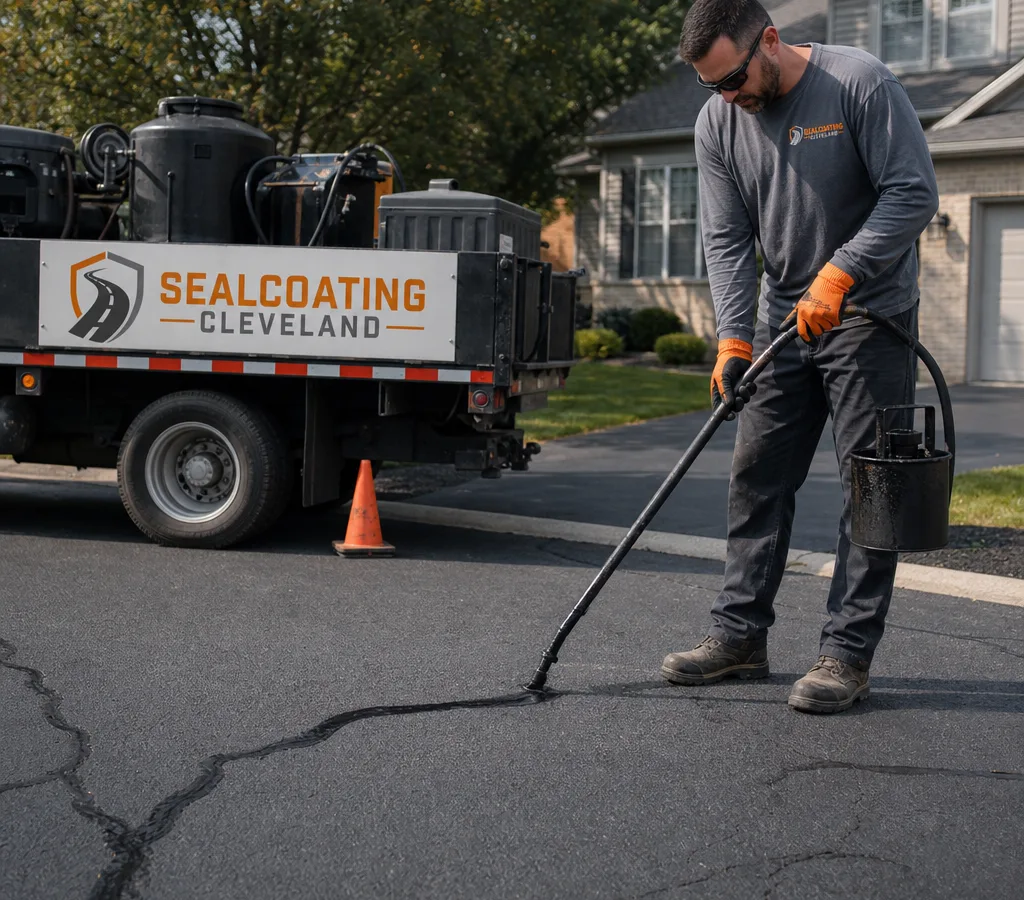
Contractor applying hot rubberized crack sealant into cleaned asphalt cracks on a Cleveland driveway with preparation tools nearby

Pavement work in tighter spaces

Lakewood pavement deserves a close look

Compact paved areas call for work that respects the line where asphalt meets a curb, apron, or garage slab.

A clean asphalt edge is more than a finishing detail when it runs beside a curb or concrete apron. Water, wheel turns, and seasonal movement can pull a joint apart over time. Looking at that connection first helps determine whether the job calls for paving, repair, crack work, or a surface treatment.

Lakewood properties can leave little extra room beside a driveway or small lot. The crew needs a place for equipment, a route for materials, and a way to keep vehicles clear without creating confusion at an entrance. Those logistics are reviewed before the appointment is booked.

Hot-mix repairs and sealcoating solve different problems. A damaged joint or failed edge may need material placed and compacted before it can be protected. Where the asphalt is still sound, cleaning and coating may be the appropriate maintenance step.

Lakewood edges, joints, and transitions

Pavement work shaped by edges and space

Joints, apron transitions, and staging space guide the work plan as much as the visible condition of the asphalt.

Where new material meets existing pavement or concrete, placement and compaction need to create a practical transition for daily driving. We inspect the existing edge, the curb contact, and the grade at the approach rather than assuming every seam can receive the same treatment.

A compact site also changes how work proceeds. Equipment is set where it can reach the repair or paving area without blocking an entrance unnecessarily. The owner receives a plan for parking, active work space, and use of the surface after the service is complete.

  • Curb joint inspection: We review the joint beside a curb for separation, edge loss, and movement that may call for repair instead of a coating-only approach.
  • Apron transition review: The meeting point between asphalt and a garage apron is checked for a smooth drive-on condition and for damage that can catch tires or hold water.
  • Equipment staging plan: Before the visit, we identify a practical place for materials and tools so the work can proceed without taking more of a compact property than needed.
  • Hot-mix placement: When paving or patching is appropriate, new asphalt is placed to connect with the existing mat and compacted for a firm, usable transition.
  • Edge finish control: Work near concrete is planned for a defined boundary, helping avoid rough cut-ins and keeping the finished asphalt where it belongs.
  • Entry reopening plan: We discuss when cars can return to the drive or lot and what areas must stay clear while new paving, repair material, or coating cures.

A clean finish starts at the edge

What a carefully finished surface provides

A Lakewood pavement project is successful when the finished surface connects cleanly to the concrete and remains workable for everyday access.

Smoother apron connection

An evaluated transition helps cars move between asphalt and a garage apron without a rough lip at the point of contact. It also gives the property owner a better basis for deciding whether repair should be completed before routine maintenance.

More durable edge work

Repairing a failed joint before coating avoids treating a structural edge problem as a cosmetic issue. The inspection explains whether the joint can be stabilized or should be rebuilt with new asphalt.

Controlled equipment footprint

A staging discussion keeps tools and materials organized in the space available instead of leaving access questions until the crew arrives.

Clearer driveway use

Parking and reopening details are set before work begins, so residents know what portion of the approach needs to remain open or protected. That shared plan is useful when a single entrance serves regular household traffic throughout the day.

Specific written scope

The quote identifies the selected work at the curb, apron, or asphalt mat, giving the owner a record of what will be done and why.

How a paving or coating visit moves

From edge inspection to finished pavement

The work sequence is built around the existing pavement edge, available staging room, and the need to reconnect the approach to normal use.

  1. 01

    Examine edges and joints

    The visit begins with the curb line, garage apron, and existing asphalt mat. We note separation, uneven transitions, and surface condition, then discuss the service that fits the observed problem.

  2. 02

    Arrange the work zone

    Residents and the crew agree on vehicle removal, equipment placement, and entrance access before the appointment. This is especially useful where a driveway or small lot has little spare space.

  3. 03

    Prepare the connection

    For repair or paving, the affected joint or failed area is readied for new material. Cleaning and surface preparation are handled as required by the selected service, not as an afterthought.

  4. 04

    Place the chosen material

    The crew completes the quoted paving, repair, crack treatment, or coating work with attention to curb contact, straight edges, and the garage approach.

  5. 05

    Review return to use

    After the work is complete, we explain how to protect the finished area and when vehicles may return. Guidance is based on the material applied and conditions at the property.

What affects a Lakewood estimate

Lakewood pavement project pricing

The price follows the pavement and access conditions at the address, not a preset rate for a compact driveway or curbside project.

For Lakewood sealcoating, the published guide is about $0.20 to $0.45 per square foot, depending on size and layout. The on-site visit shows whether curb edges, cracks, cleaning, or a concrete transition add preparation that belongs in the scope before a coating is applied.

Driveway-scale work is commonly around $250 to $650 for a standard residential driveway. Larger paved areas and commercial lots commonly run $900 to $3,500+, depending on size and layout. We provide the written quote after looking at the joint condition, work area, and access plan.

Scheduling a Lakewood project

Lakewood service planned from Cleveland

Lakewood service is scheduled from our Cleveland location, then organized around the staging limits and entry access at the property.

Our crew travels to Lakewood from 1728 St Clair Ave. NE, Suite 4, Cleveland, OH 44114. The pre-work conversation covers the driveway or lot entrance, nearby curb conditions, parking, and the space available for materials. It is a single Cleveland-based operation, not a Lakewood office.

On service day, the staging arrangement is put into practice and the active area is kept clear for the selected work. Before departing, we review the protection and reopening instructions that apply to that driveway or paved area. The timing comes from the work completed and conditions on site.

  • Curbside equipment space: Ask where trucks and tools will be staged when a curb or compact entrance limits available room around the paved area.
  • Garage access timing: Confirm when vehicles need to be removed and when the garage approach can be used again after paving, repair, or coating.
  • Joint repair scope: Ask whether a separated edge or transition is included in the repair plan or whether it changes the work needed before sealcoating.
  • Concrete protection plan: Discuss how the asphalt-to-concrete boundary will be handled so the finished work has a neat, usable line at the apron or walk.
  • Written reopening guidance: Request property-specific instructions for protecting fresh material and returning cars to the surface when it is ready.

Paving and finishing in view

Paving details from edge to apron

Paving, compaction, and a completed residential driveway illustrate how tight edges are built and finished.

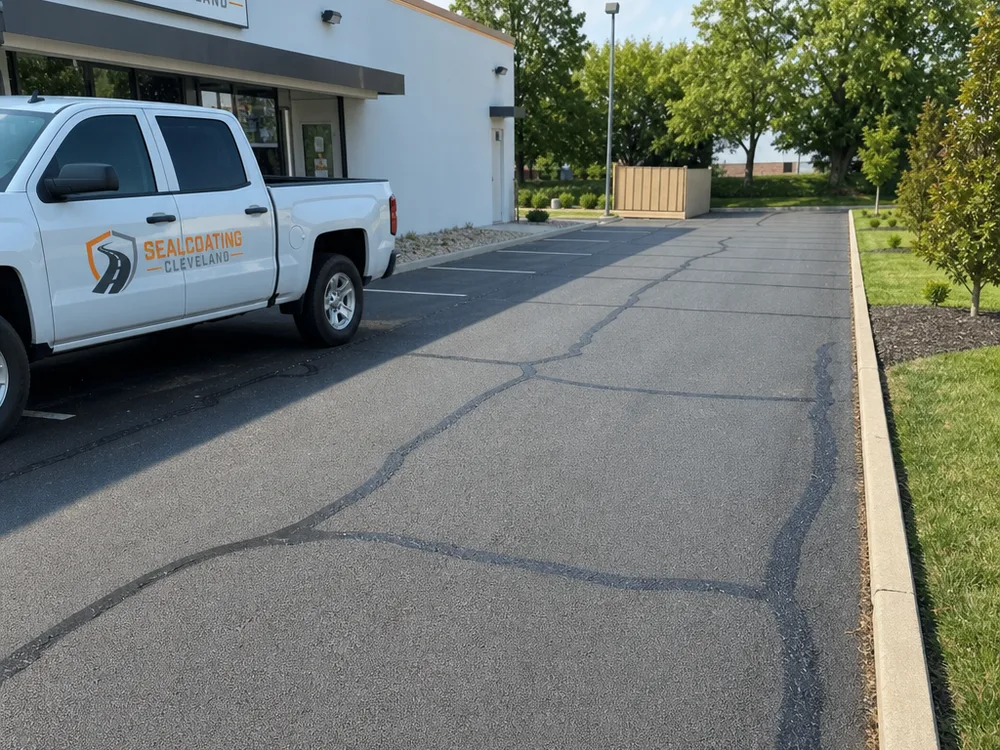
Finished commercial lot lane with neat crack-seal overbanding along transverse cracks near a curb line
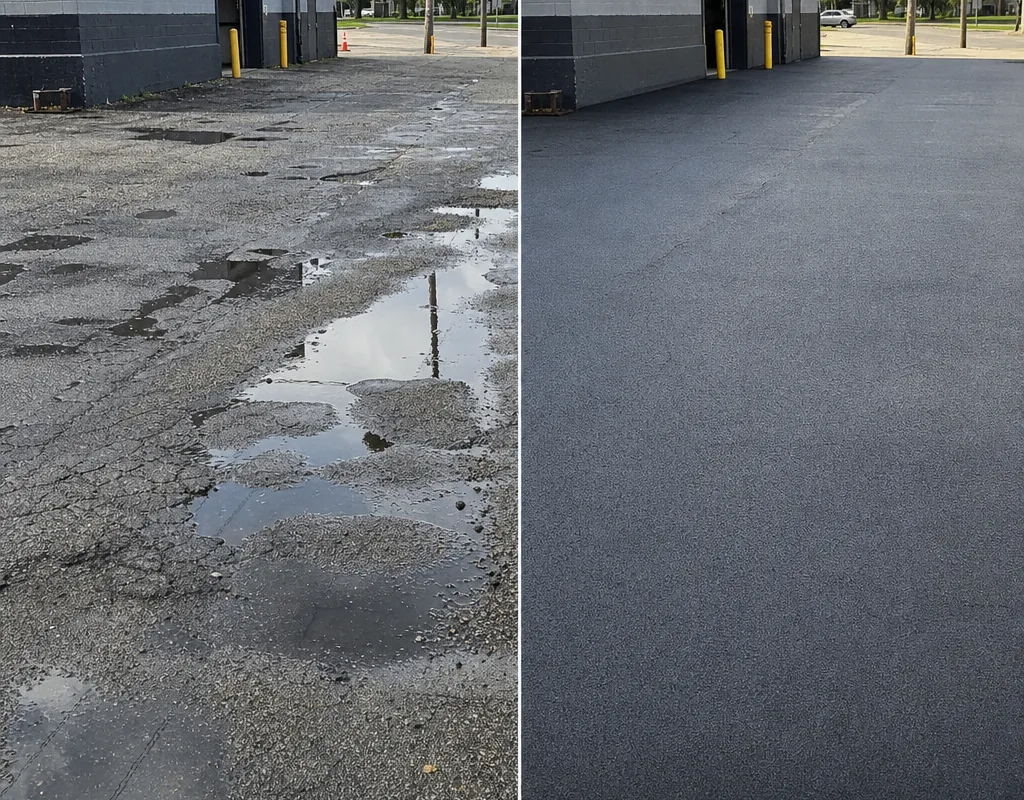
Before-and-after comparison of a cracked puddling parking area and the same area after regrading and paving
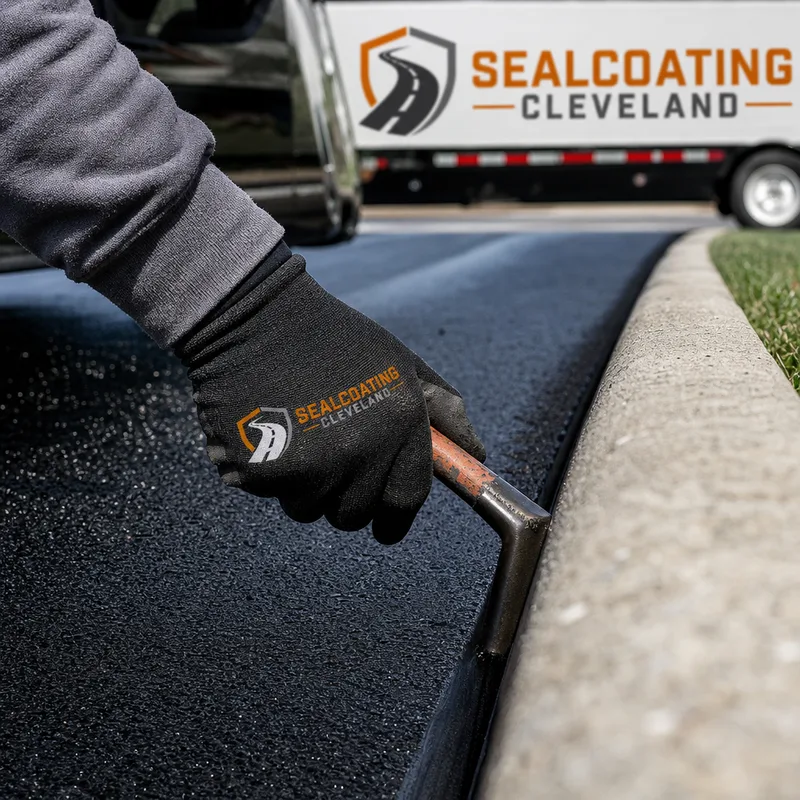
Paving crew hand-working an asphalt edge joint beside a curb to create a tight seam and uniform mat

Common Lakewood project questions

Answers for Lakewood pavement planning

These answers address compact-site access, curb connections, and the repair choices that commonly affect Lakewood pavement work.

Why are curb joints reviewed before Lakewood asphalt work?

A curb joint can show separation, crumbling, or water entry that affects the edge of the asphalt mat. During the site visit, we determine whether that area can be maintained as is or needs repair first. A coating can protect sound asphalt, but it does not replace material where an edge has already failed.

What does a garage apron transition change about the work?

The crew examines how the driveway meets the concrete apron, including grade, edge condition, and the path vehicles take each day. That information guides the repair, paving, or cut-in plan. It also helps avoid a finished surface that looks acceptable but leaves an uncomfortable or uneven drive-on point.

How is equipment handled on a compact Lakewood property?

Staging is discussed before service day so residents know where equipment and materials can be placed. The plan accounts for available room, entry access, and vehicles that need to be removed. Addressing those details early gives the crew a safer place to work and reduces disruption around the driveway or small lot.

When does an asphalt edge need more than sealcoating?

Broken, unsupported, or separating edges may need repair before surface protection makes sense. We examine whether the damage is limited to a treatable crack or whether the asphalt has lost enough material to require a patch or paving work. The written quote separates those options so the recommended sequence is clear.

How are Lakewood sealcoating prices determined?

Sealcoating is about $0.20 to $0.45 per square foot, depending on size and layout. A standard residential driveway is around $250 to $650, while larger paved areas and commercial lots commonly run $900 to $3,500+. The on-site review determines how edge condition, access, and preparation affect the written scope.

What should I plan before a paving or coating appointment?

Move the vehicles identified during scheduling, make the agreed work space available, and tell us about any entrance or access issue that could affect the day. After work begins, keep the active area clear. We provide reopening guidance based on the service performed, helping residents return to normal driveway use without disturbing fresh material.

Along curb lines, request an on-site quote

Plan your Lakewood pavement work

If a Lakewood curb edge, apron transition, or compact driveway needs attention, schedule an on-site assessment. We will inspect the asphalt, discuss staging and access, and send a written quote from our Cleveland shop.

Request a quote

Tell us about your pavement

Send the details and we will come back to you to arrange an on-site look and a written quote.