
Repairs that carry traffic
A full-depth patch rebuilt to grade takes vehicle loads the way the original pavement did, instead of settling into a depression that collects water again.
Serving Cleveland, Ohio & surrounding areas
Mon–Fri 8am–6pm · Sat 9am–2pm
Euclid asphalt repair and maintenance
Worn pavement in Euclid usually needs repair before protection. We assess what has failed, fix it, and only then apply a coating that can hold.
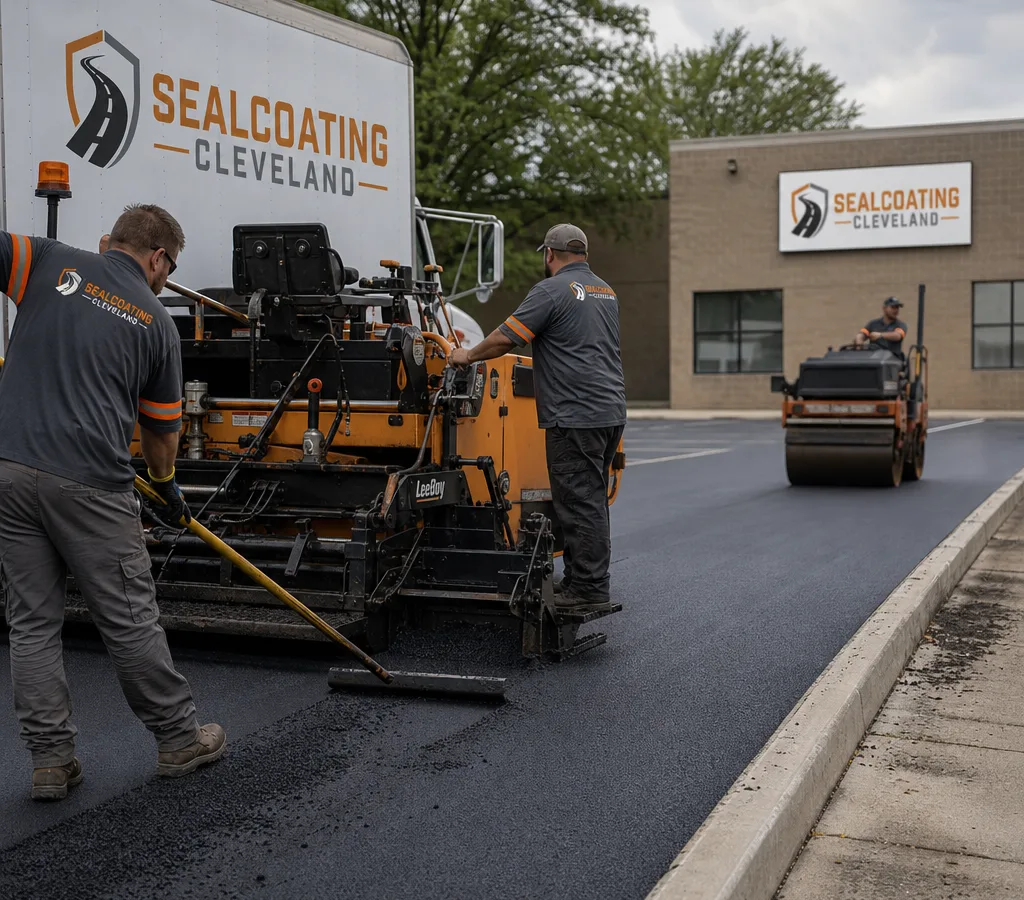
Repair before surface protection
Coating a surface that is already breaking apart hides the problem for a season. Euclid pavement is better served by an honest condition check first.
Asphalt fails from the bottom up as often as the top down. Water reaching the base through open cracks softens the material underneath, and the surface then moves under traffic until it breaks into interconnected pieces. On older pavement that shows as cracked lanes and crumbling edges rather than simple fading.
An assessment separates surfaces that are sound but dry from surfaces that have begun to fail structurally. The first group benefits from sealing, while the second needs patching, full-depth repair, or in some cases new asphalt, because no coating adds strength to material that has already lost its structure.
That distinction decides where the money goes. Spending a full coating budget on pavement that needs repair wastes both, while repairing first and coating afterward protects the work. We document what we find, so the choice is yours and the scope reflects the pavement rather than a standard package.
Euclid work for broken asphalt
What the work involves depends on what the inspection turns up, so the scope gets written after the pavement has been examined rather than before.
Repair precedes surface treatment for a practical reason. A patch placed after coating leaves a visible seam and an unprotected edge, while the same patch placed beforehand disappears under a uniform finish. Sequencing the work this way costs nothing extra and looks considerably better once it is done.
Not every defect needs the same response. Hairline cracks can be cleaned and filled, wider working cracks need routing and a rubberized filler, and areas that flex underfoot usually need removal and replacement. Matching the response to the defect is most of what separates lasting work from a cosmetic pass.
Defects need the right response
Repair done in the right order produces a surface that behaves predictably for years, rather than one that merely looks finished for a few months.
A full-depth patch rebuilt to grade takes vehicle loads the way the original pavement did, instead of settling into a depression that collects water again.
Filled cracks and sound repairs stop water reaching the material underneath, which is where most asphalt failure begins in a freeze-thaw climate.
Coating applied after patching runs across the whole surface evenly, so completed repairs blend in rather than advertising themselves in a different shade.
Knowing which areas need repair and which need only protection keeps spending proportionate, and avoids coating a surface that is going to fail anyway.
Once the failures are addressed, the surface moves onto a normal inspection and resealing cycle instead of needing repeated emergency attention.
From failed area to usable pavement
The sequence below runs from assessment through to reopening, with the repair decisions settled in writing before any material reaches the site.
We walk the pavement, note each defect type, mark the areas needing repair, and photograph anything that affects the decision. Drainage gets particular attention, since standing water explains most localized failures.
You receive a scope separating repair from surface treatment, with the reasoning for each item. Where a surface is borderline, both options are priced so the choice is informed rather than assumed.
Failed areas are cut out and rebuilt, cracks are cleaned and filled according to type, and edges are made sound. This is the part that determines how long the finished surface lasts.
With repairs cured, the surface is swept and cleaned, then sealer is applied at the appropriate rate. Concrete, pavers, and landscaped edges are protected before any material is opened.
We review the completed work with you, confirm coverage and edges, then set out when the surface should next be inspected and resealed, based on its condition and its use.
Estimate the condition, not a guess
Pricing follows the pavement: a surface needing repair is a different job from one needing only protection, and the quote should say plainly which it is.
Two numbers matter on a repair-first job, and they stay separate. Protection is quoted by area, about $0.20 to $0.45 per square foot, depending on size and layout. Repair is quoted by what has actually failed, which is why an inspection has to come before either figure means very much.
Where a surface needs only sealing, a standard residential driveway is typically around $250 to $650. Larger paved areas and commercial lots commonly run $900 to $3,500+, depending on size and layout. Those are protection figures, and any patching work appears as its own line so you can see what each part costs.
Euclid coverage from Cleveland
Euclid sits inside our regular service area, and covering it from the Cleveland shop shapes a few practical things about scheduling and staging on a repair job.
Repair and coating are often two visits rather than one, because a patch needs time to cure before a surface treatment goes over it. Both get scheduled when the scope is agreed, so the full timeline is clear from the start instead of a second appointment appearing later on.
Material and equipment come from our Cleveland yard, which means the staging plan is settled before the crew arrives: where the truck sits, which section gets worked first, and what stays accessible throughout. On a shared drive or a small lot, that plan matters considerably more than the travel distance does.
Repairs in the photo set
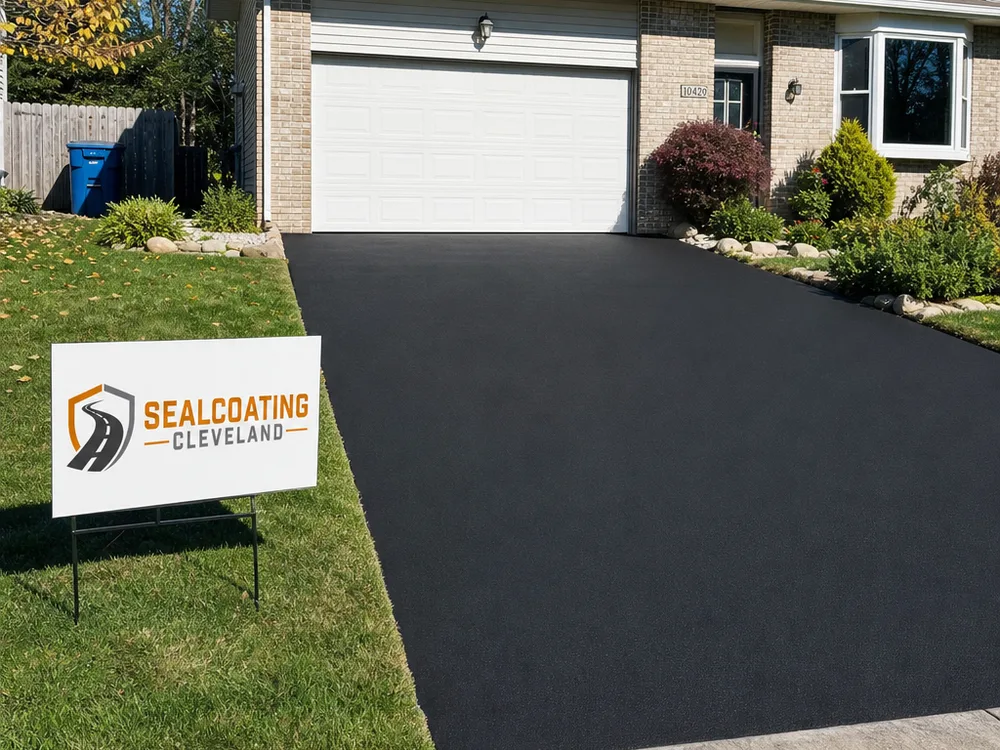
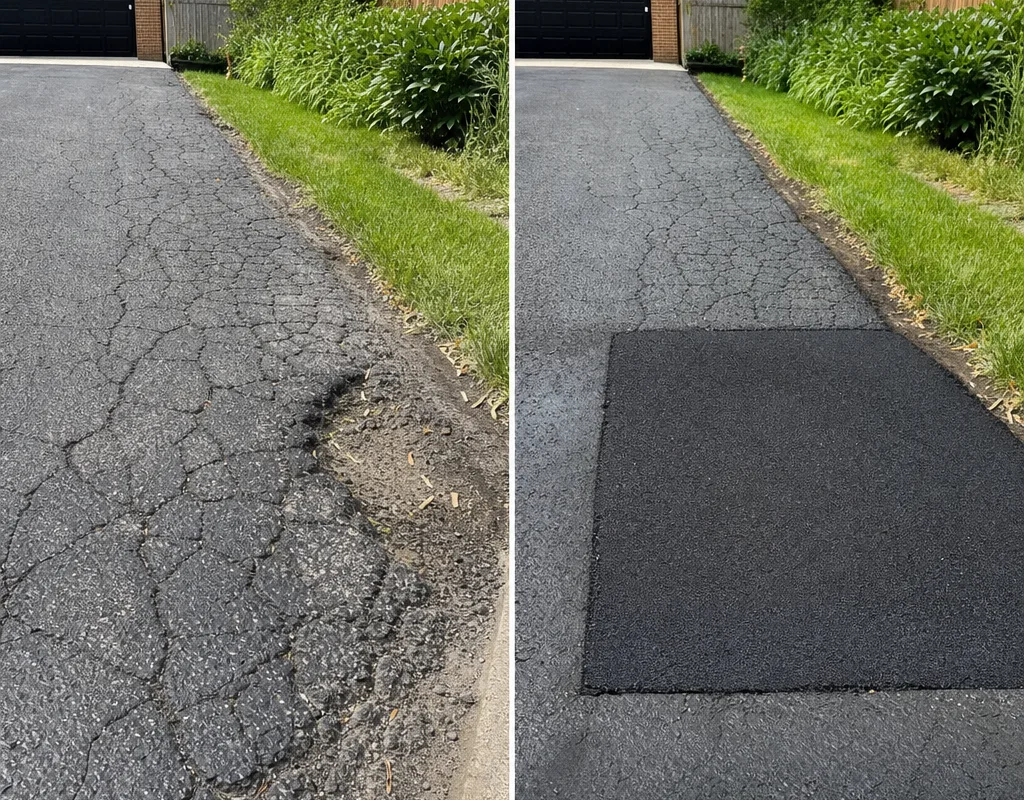
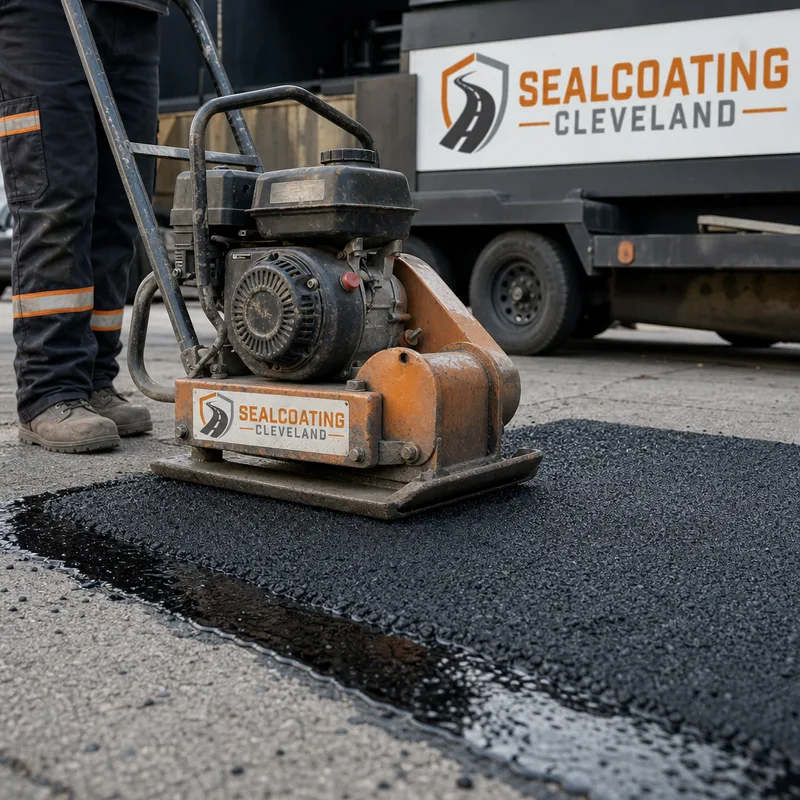
These photographs show repair work rather than a finished coating: overbanded cracks along a curb line, a replaced section where alligator cracking had taken hold, and a square patch being compacted.
Euclid asphalt maintenance answers
Questions below come up most often when a surface has visible damage and the owner is weighing repair against replacement.
Sealer is a protective coating rather than a structural material, so it cannot bridge a pothole or restore a failed area. The pothole needs cutting out and patching first, and the coating then goes over the repaired surface. Coating straight over one hides it for a few weeks at most before the depression returns.
Surface condition and movement. Pavement that is dry, gray, and showing narrow cracks is usually sound and benefits from sealing. Pavement that flexes under weight, carries interconnected cracking in a pattern, or has holes opening at the edges has lost structure, and that needs repair before any coating is worth applying.
Doing the repairs together is usually more economical, because mobilization, setup, and traffic control get paid for once instead of repeatedly. Where a budget has to be split, the sensible division is to repair the structural failures now and schedule the protective coating for the next season, rather than the other way around.
Water keeps entering through the cracks and the base keeps softening, so the coating sits on a surface that is still deteriorating underneath. The visible result is a dark finish that develops the same cracks within a season or two, usually in the same places, because nothing addressed the cause.
It depends how far the failure extends. A localized hole is cut square and patched full depth. Where cracking covers a broad area in an interconnected pattern the base is usually the problem, and a patch there only moves the failure a few feet, so removing and replacing the section is the honest answer.
Hot mix patches need time to cure before a coating goes over them, typically a matter of weeks rather than days, and the exact wait depends on temperature and how thick the patch is. We set the second visit when the repair is scheduled, so the interval is planned rather than guessed at.
Across damaged asphalt, request an on-site quote
Tell us what you are seeing on the surface: cracking, holes, soft areas, or water sitting after rain. We will look at the pavement, say what has failed and what has not, and put the repair and protection options in writing.
Request a quote
Send the details and we will come back to you to arrange an on-site look and a written quote.