
Low spots treated honestly
Areas that pond get prepared properly or flagged as needing grade work, rather than coated over so the problem reappears through a fresh finish.
Serving Cleveland, Ohio & surrounding areas
Mon–Fri 8am–6pm · Sat 9am–2pm
Pavement maintenance in Mentor
Wide aprons and commercial lots give water somewhere to sit. We read the drainage first, then build a coating plan that accounts for where it collects.
Maintenance for larger paved areas
Where water goes after a storm tells you more about a pavement's future than its color does. That reading comes first on larger Mentor surfaces.
Broad paved areas rarely drain evenly. Slight dips hold water after rain, and those spots age faster than the rest of the surface because the material stays saturated between freezes. Finding them means looking at the pavement wet, or reading the staining and sediment lines that show where water has been standing.
A larger surface also carries uneven wear. Turning areas, approach aprons, and the stretch nearest an entrance take far more punishment than the middle of a lot, so the same pavement can need three different treatments across one property. Treating it as a single uniform area leaves the busy sections under-protected.
Accounting for both gives a plan with priorities in it. The low-lying and heavily used areas get attention and sometimes a second coat, the sound middle gets straightforward protection, and the written scope says which is which so nothing is silently averaged out.
Mentor crack and pothole planning
Work on a wide surface is organized by zone rather than treated as one continuous sweep, because the demands change across the property.
Drainage shapes the sequence. Areas that hold water are cleaned and dried before anything is applied, since sealer put over a damp low spot will not bond properly and shows it within weeks. Where a dip is pronounced enough to pond regularly, that is worth saying out loud rather than coating over and hoping.
Wide aprons bring their own detail. The joint where asphalt meets a concrete apron or garage slab moves seasonally and opens first, so it gets treated as a working joint rather than a decorative edge. Getting that line right is most of what makes a large driveway look finished.
Keep water out of open defects
Protection applied with the drainage understood lasts longer, and the difference shows up first in the areas that used to deteriorate ahead of everything else.
Areas that pond get prepared properly or flagged as needing grade work, rather than coated over so the problem reappears through a fresh finish.
Turning zones and entrance approaches carry the heaviest loads, and scoping them separately means they get coverage suited to that use.
Treating the concrete transition as a working joint keeps it sealed through seasonal movement, which is where water usually finds its way in first.
Even coverage across a wide area, with clean cut-in edges along concrete and landscaping, gives a large driveway or lot a deliberate appearance.
With the problem areas identified, resealing becomes a scheduled expense on a known interval rather than an unpredictable repair bill.
Sequencing work around traffic
Each stage below is sized to the property: a wide surface takes longer to prepare than a single-car drive, and the schedule reflects that from the start.
We measure the surface, map where water collects, and identify the zones that take the most traffic. Photographs of staining and sediment lines record the drainage pattern for the written scope.
The quote divides the property into the areas we found, with the treatment for each one stated. Anything needing grade correction rather than coating is named separately so it is not buried.
Sweeping, joint clearing, and drying of low areas happen section by section. Oil-affected areas near garages and loading points get additional treatment before any coating goes on.
Material goes down at the rate each surface texture requires, with the heaviest-traffic zones receiving the heavier treatment. Edges along concrete and planting beds are cut in by hand.
Sections reopen as they cure rather than the whole surface at once where that suits the property, and we confirm coverage and edges with you before the barricades come up.
Published ranges, site-specific scope
A larger surface changes the arithmetic, since area drives most of the cost but layout and drainage decide how much preparation sits underneath it.
Square footage is the starting point on a wide property. Sealcoating is about $0.20 to $0.45 per square foot, depending on size and layout, and a bigger area usually sits toward the lower end of that band because mobilization is spread across more surface. Preparation is what moves it back up.
For reference, a standard residential driveway is typically around $250 to $650, while larger paved areas and commercial lots commonly run $900 to $3,500+, depending on size and layout. Which band a wide apron falls into depends on its measured area, so we measure before quoting rather than estimating from the street.
How Mentor scheduling works
Mentor is within the area we cover from Cleveland, and on a larger property the planning that travel requires turns out to be an advantage.
A wide surface is a full day or more of work, so it gets booked as a committed block with the material calculated in advance from the measured area. That removes the mid-job supply run, which is the usual reason a large driveway ends up with a visible difference between one section and another.
Weather carries more weight on a big open area than on a small drive, because there is more surface to protect and longer exposure before it cures. We watch the forecast against the booking and would rather move a date than apply material that will not set properly across the whole property.
Maintenance work shown here
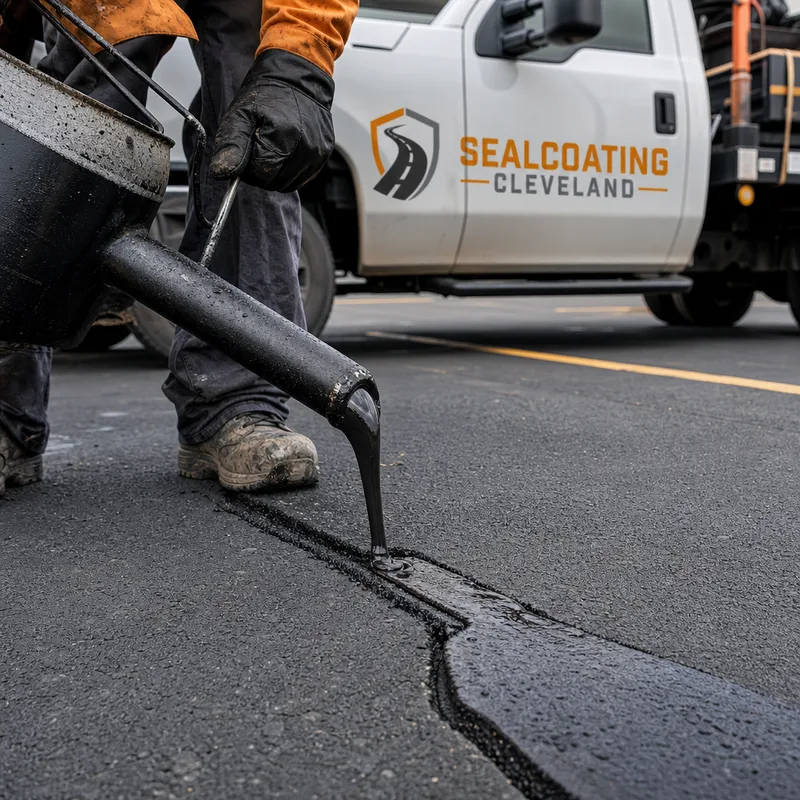
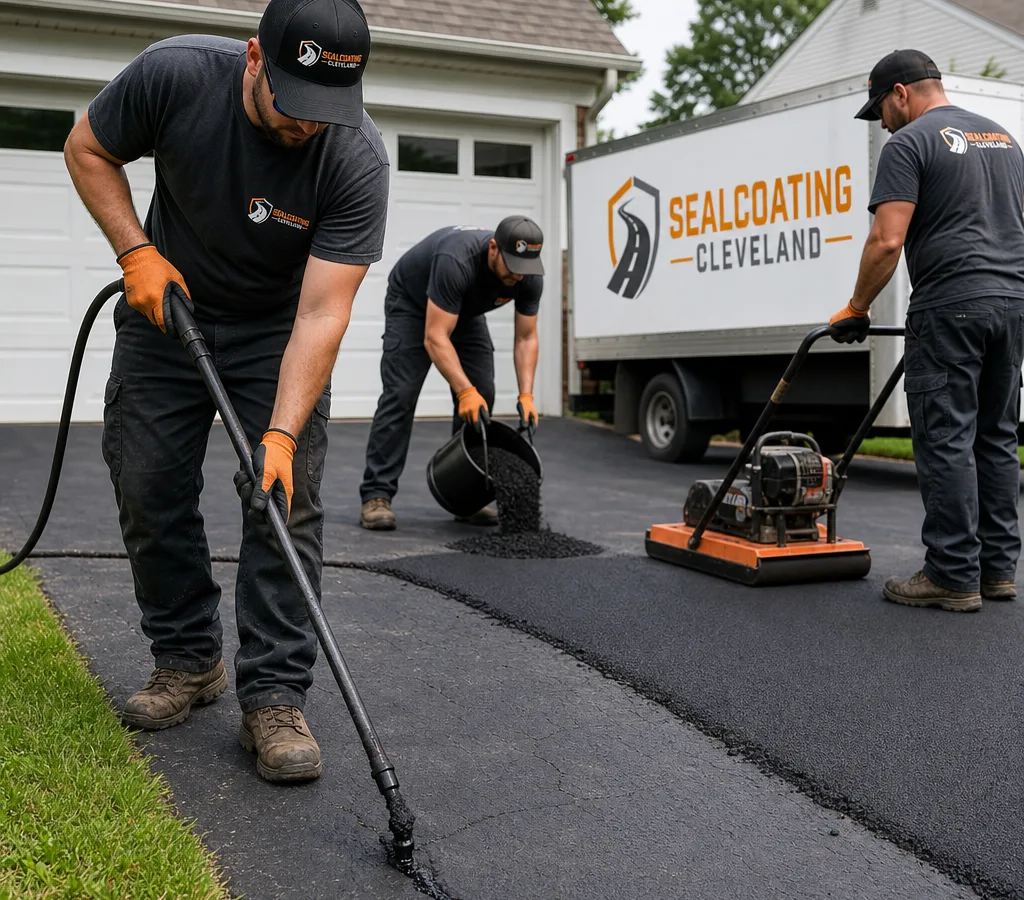
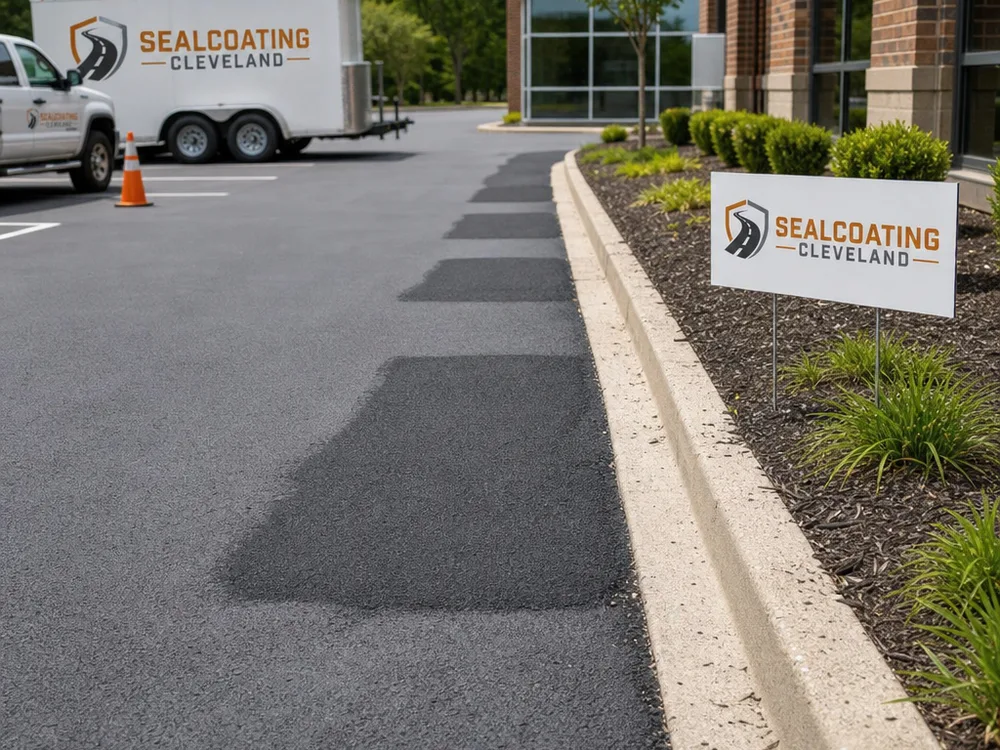
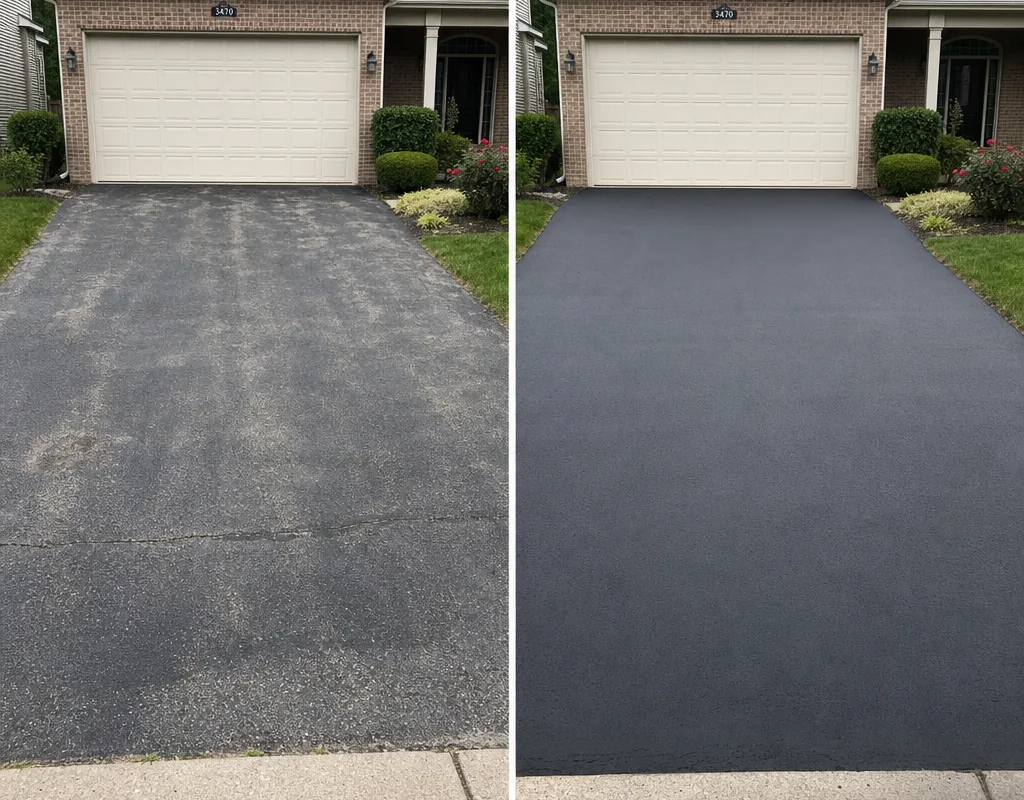
The images here are from crack and repair work: hot-pour sealant going into a routed crack with its overband, a driveway repair being compacted, and a lot where potholes have been repaired and the grade corrected.
Mentor pavement service FAQ
These come up most often from owners of wider driveways and operators of commercial lots, where surface area and access both complicate the job.
Not quite proportionally. Sealcoating is priced by area, so a bigger surface does cost more in total, but the per-square-foot figure often sits lower because setup, travel, and equipment are spread across more pavement. Preparation work pushes it the other way, so the measured area and the condition together determine where you land in the published range.
Sealcoating does not change grade, so a dip that ponds will keep ponding under a new coating. What helps is knowing where those areas are: they get dried and prepared thoroughly, and they go on the inspection list as the places to watch. Where ponding is severe enough to be shortening the pavement's life, the honest answer is that it needs grade correction or drainage work, which we will say rather than coat over.
Usually yes, by working in sections and moving barricades as each one cures. It takes longer overall and needs a plan agreed in advance covering which entrance stays open, where customers park, and how deliveries get in. On a property that genuinely cannot close any section during business hours, early morning or weekend scheduling tends to work better.
Asphalt and concrete expand and contract at different rates, so the joint between them moves every season. Filled with rigid material it simply cracks again at the first temperature swing. Treated as a working joint with a flexible material, it accommodates that movement and stays closed, which keeps water out of the spot where it does the most damage.
It depends on texture as much as area. A smooth, recently sealed surface takes relatively little, while a coarse, oxidized one can absorb noticeably more per square foot. That is why coverage gets set from the pavement in front of us rather than from a standard rate, and why we calculate quantities from a measurement before the work is booked.
Sometimes, and selectively rather than everywhere. Heavily trafficked areas such as turning zones and entrance approaches benefit from a second application, while a sound middle section generally does not need it. Blanket two-coat pricing on a large area often charges for material where the first coat was already sufficient.
When drainage guides scope, request an on-site quote
Tell us the approximate size of the surface and whether water sits anywhere after rain. We will measure it, note the drainage and the busy areas, and give you a written scope with the zones and the pricing set out.
Request a quote
Send the details and we will come back to you to arrange an on-site look and a written quote.