
The property keeps working
Phased closures mean some of the lot stays available every day, so residents park and customers arrive while the work moves across the surface.
Serving Cleveland, Ohio & surrounding areas
Mon–Fri 8am–6pm · Sat 9am–2pm
Cleveland Heights parking and asphalt care
Shared lots cannot simply close for a day. We plan the access windows first, then work in sections so tenants, customers, and residents keep moving.
Pavement and parking guidance
A lot that several people depend on is a scheduling problem before it is a pavement problem. That is where a Cleveland Heights job starts.
Apartment, condominium, and retail lots carry obligations a private driveway does not. Residents need somewhere to leave a car overnight, a storefront needs its customers able to park, and both expectations arrive at the same piece of pavement. Any plan that ignores one of them fails on the first morning of work.
Markings add a second layer. Stall lines, directional arrows, accessible spaces, and crossings all disappear under a fresh coating, so the layout has to be recorded before the surface changes and reinstated afterward. A lot that reopens without its markings is harder to use than it was before the work started.
What makes these jobs work is agreeing the sequence with whoever manages the property. Which section closes first, where displaced cars go, how long each phase lasts, and who tells the occupants: settling that in advance turns a disruptive week into a predictable one.
Cleveland Heights work for shared lots
On a shared surface the work is divided into phases, with each phase sized so enough of the lot stays usable throughout.
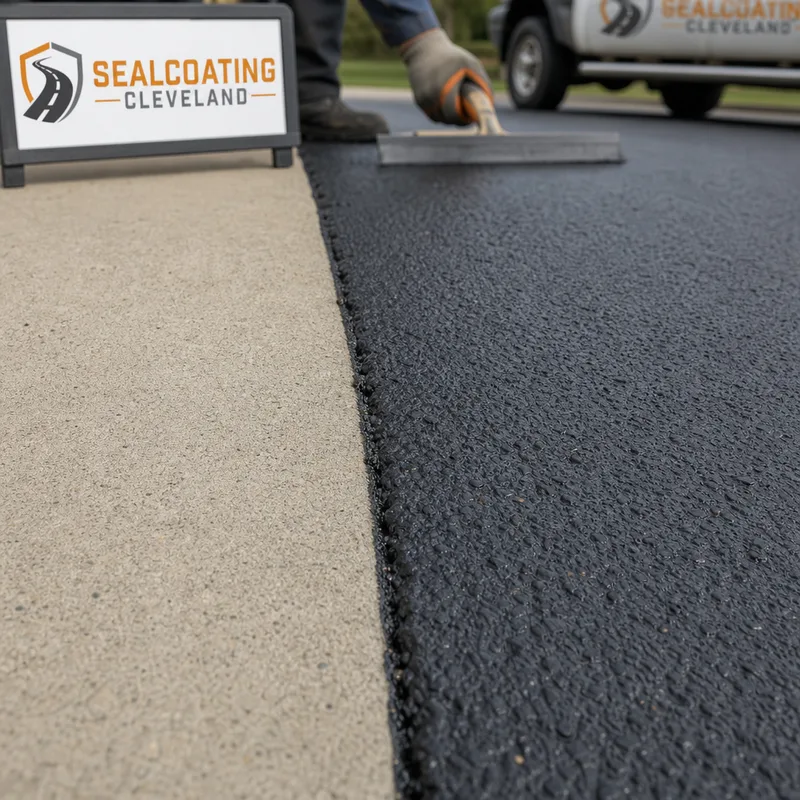
Phasing is the core of it. A lot is split into sections that can be closed one at a time, with barricades and signs moved as each section cures. That extends the overall schedule compared with closing everything at once, but it keeps the property operating, which is almost always the more important consideration.
Markings are documented before anything is applied. We photograph and measure the existing layout, including stall spacing, arrow positions, accessible spaces, and any crossing, so the lot can be reinstated exactly or improved deliberately rather than approximated from memory once the coating is down.
Markings and maintenance work together
Work planned around how a shared lot is actually used leaves the property better to operate, not merely darker in color.
Phased closures mean some of the lot stays available every day, so residents park and customers arrive while the work moves across the surface.
Reinstating from a recorded plan rather than from memory keeps stall counts and spacing right, which matters where every space is allocated.
Fresh arrows and crossings make circulation obvious again, and that is often the most noticeable improvement to anyone using the lot daily.
Accessible stalls and their access aisles are measured and repainted to the dimensions recorded, rather than being fitted into whatever space remains.
Notice given in advance and a published phase order means the property manager answers far fewer questions once the work is underway.
Organizing the active work area
The stages below are arranged around the property's access needs, so the sequence is agreed with whoever manages it before any date is confirmed.
We walk the lot with whoever runs the property, noting the layout, the pinch points, and which sections absolutely cannot close together. Peak usage times shape the phase order more than anything else does.
Existing markings are measured and photographed in full: stall spacing, arrow placement, accessible spaces, crossings, and fire lane designations, so nothing is reconstructed from guesswork later.
You receive the phase order with durations, and signage goes up for occupants ahead of time. Everyone knows which section is closed on which day before the crew arrives on site.
Each phase is prepared, coated, and left to cure behind barricades while the rest of the lot operates. Access routes are checked each morning as the work moves across the property.
Markings are reinstated from the recorded layout once the surface will hold paint, then we walk the finished lot with the manager and confirm every space and route is back.
Pricing shaped by layout
Cost on a shared lot comes down to two things: the area to be covered, and how much the phasing and the markings add on top of it.
Coverage is the base figure, at about $0.20 to $0.45 per square foot, depending on size and layout. Phasing adds to it, because closing a lot in sections means several mobilizations instead of one, and that is a real cost rather than an administrative one. We state it separately so the trade-off is visible.
As published guidance, a standard residential driveway is typically around $250 to $650, and larger paved areas and commercial lots commonly run $900 to $3,500+, depending on size and layout. Shared lots sit in that upper band, and restriping is quoted by the markings counted during the walk rather than bundled into a single figure.
Coverage for Cleveland Heights properties
Cleveland Heights is part of the area we serve from our Cleveland base, and on a phased job that coordination matters more than the distance involved.
A phased lot means several visits across a week or more, each one a committed slot in the schedule. Those dates are fixed when the phase plan is agreed, because a property manager cannot give notice to residents about a closure that might move, and shifting a phase mid-job undoes all the notice already given.
Coordination runs through one contact on our side and one on yours, which keeps the daily questions simple: what is closed today, what opens tomorrow, and whether anything needs saying to occupants. On a property with tenants that single line of communication prevents most of the friction these jobs can generate.
Striping work in these images
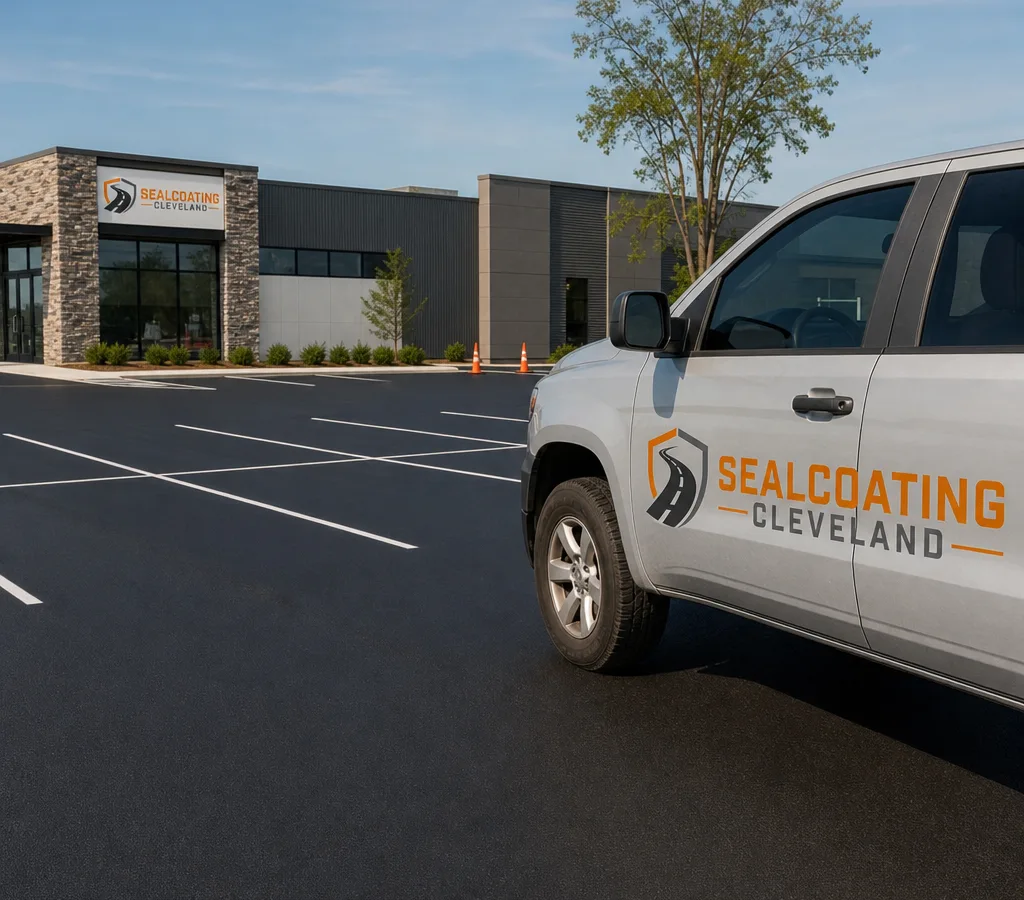
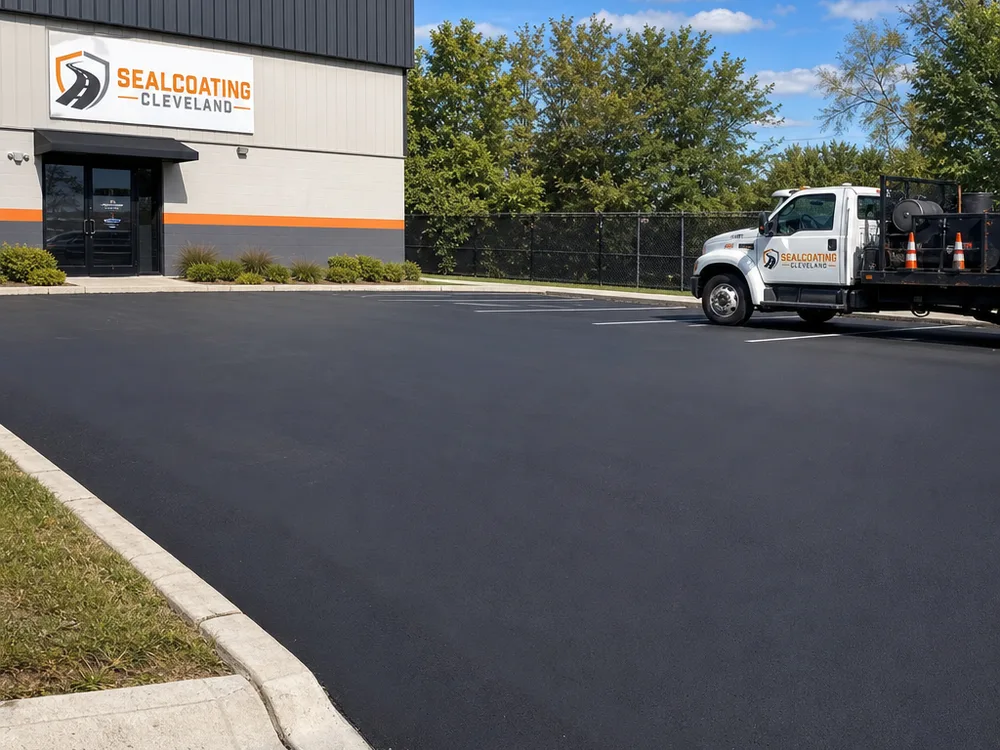
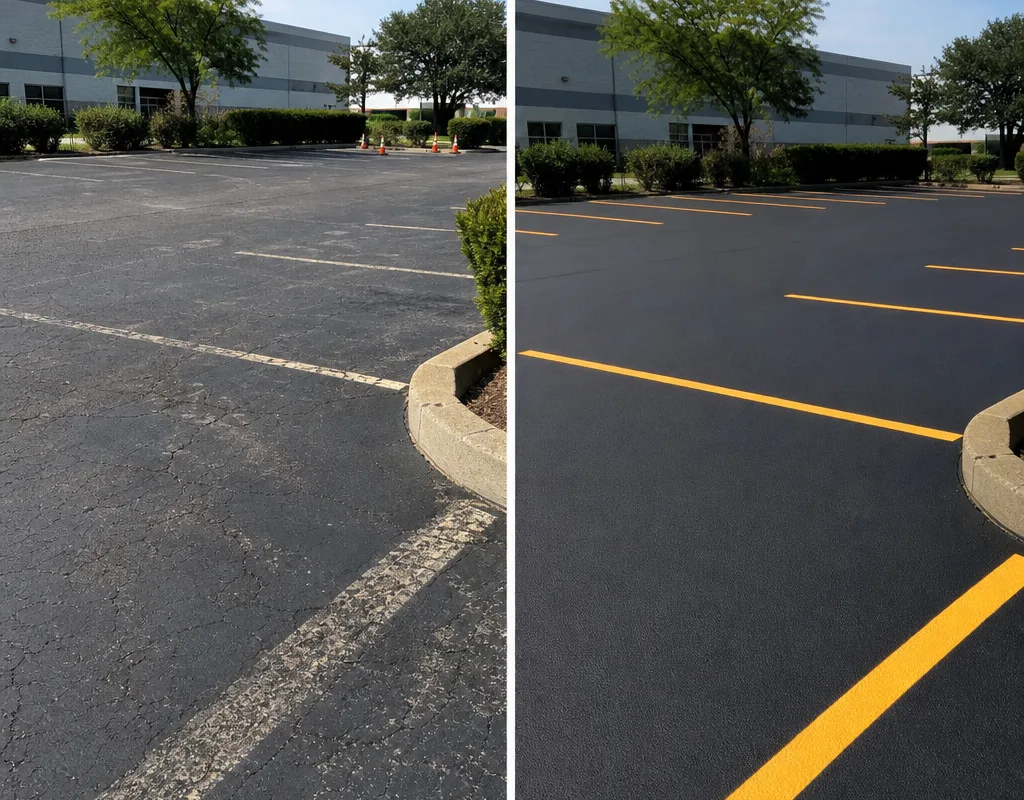
These photographs are striping work: a crew measuring and snapping a line before painting, a finished lot with stalls and directional markings, and a retail lot with its crossing repainted.
Cleveland Heights service questions
Property managers and owners of shared lots ask these most often, and they are mostly about access and markings rather than the coating itself.
Each phase typically needs the better part of a day to prepare and coat, plus curing time before vehicles return, which commonly means a section is out of use for around 24 hours. The total project length depends on how many phases the lot is divided into: more phases keep more parking available at any one time but extend the overall schedule.
Yes, and that is part of the work rather than an extra. Coating covers every existing marking, so reinstating them is necessary for the lot to function. We measure and photograph the layout beforehand, including stall spacing, arrows, accessible spaces, and crossings, then repaint from that record once the surface will hold paint.
Usually, and it is worth discussing early. Retail properties often prefer early mornings or weekends, while residential lots frequently work better midweek during the day when more residents are out. The phase order gets built around whatever the usage pattern is, so tell us when the lot is quietest.
Which section closes on which date, where to park instead, and when their usual space returns. We provide the phase plan with durations so that notice can go out accurately, and signage goes up on site as well. Specific dates given in advance generate far fewer complaints than a general warning that work is coming.
They are measured more carefully, because the stall and its access aisle have dimensional requirements that an approximate repaint can miss. We record the existing dimensions before coating and reinstate to that record. Where the current layout already falls short, we will tell you, since that is useful to know while the lot is being repainted anyway.
It can, and it is cheaper, because one mobilization covers everything. The condition is that the lot closes entirely for the work plus curing time, which suits a property with alternative parking or a weekend with no activity. Where that is genuinely possible it is the better option, and we will say so rather than phasing by default.
Within shared parking areas, request an on-site quote
Tell us roughly how many spaces the lot has and when it is quietest. We will walk it with you, record the existing markings, and come back with a phase plan and pricing that keeps the property operating.
Request a quote
Send the details and we will come back to you to arrange an on-site look and a written quote.